MEAT PROCESSING & OEM
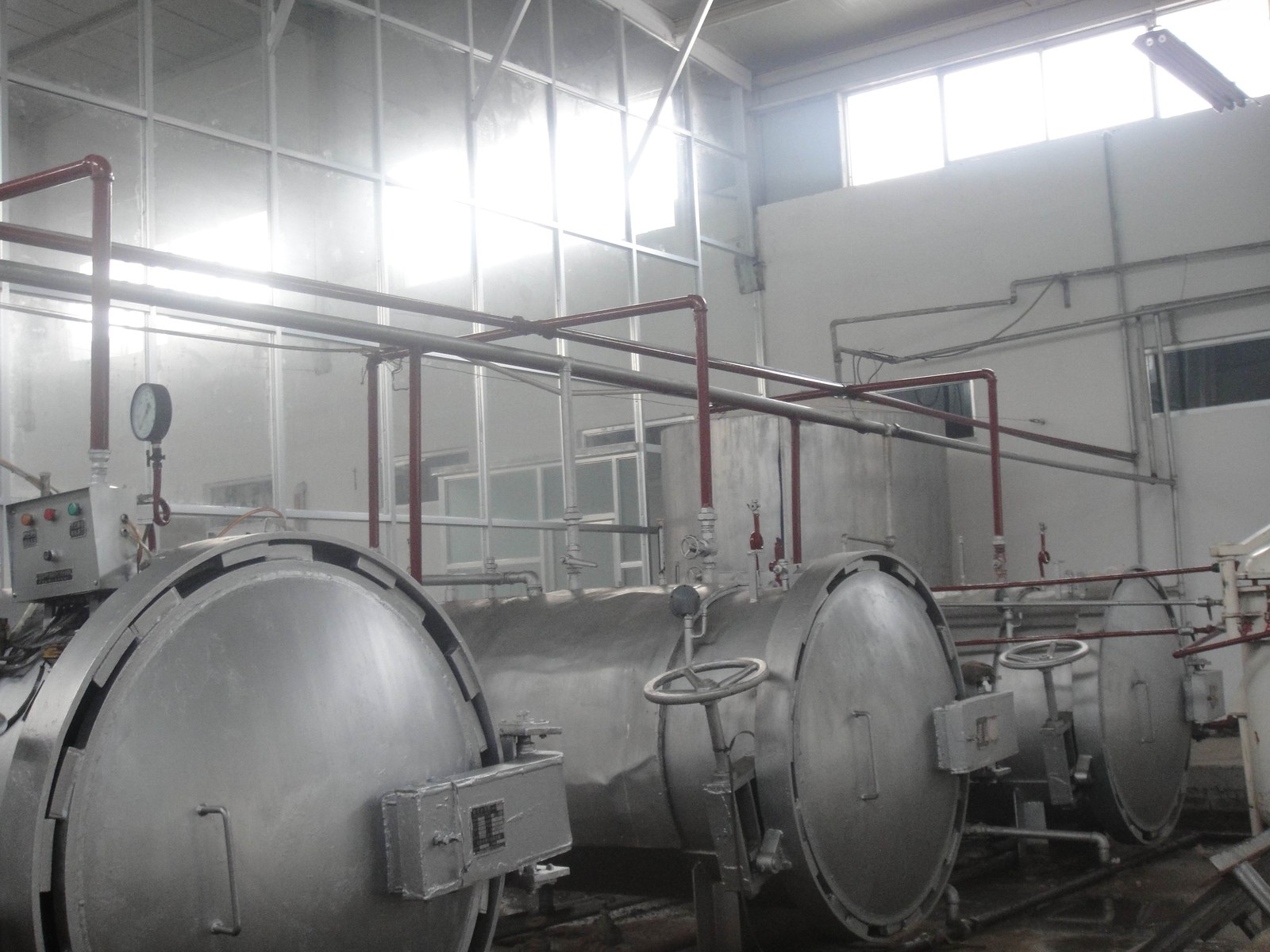
Meat Processing and OEM Partnerships
Choosing a contract manufacturer means entrusting your brand to someone else's line.
This page sets out what the arrangements are, and what to verify.
Choosing a contract manufacturer means entrusting your brand to someone else's line.
This page sets out what the arrangements are, and what to verify.
What is loosely called "contract manufacturing" covers several arrangements that are legally quite different.
| Term | Who defines the product | Typical situation |
|---|---|---|
| OEM (commissioned production / private label) | The buyer supplies the recipe, process or specification; the manufacturer produces to it under the buyer's brand | A brand owner has a recipe but needs capacity and a compliant line |
| ODM (design manufacturing) | The manufacturer supplies the recipe and product concept; the buyer selects and applies their own brand | A brand owner has distribution but lacks product development |
| Toll processing | The buyer supplies raw materials; the manufacturer provides only processing and packing | The buyer controls sourcing and borrows processing capacity |
| Prepared-dish / semi-finished co-packing | Produced to agreed reconstitution methods and specifications, delivered chilled or ambient | Standardised supply for restaurant chains and retail channels |
Prices are easy to compare; capability is not. Put each of these in writing.
| Check | What to look at | Why it matters |
|---|---|---|
| Food production licence (SC) | Whether the licensed category matches the product (meat products, canned goods and frozen foods fall under different categories) | The licence is the precondition for production; a mismatched category amounts to unlicensed production |
| Product standard applied | Whether the product follows a national, industry, local or group standard — and whether the standard number can be produced | It sets the compliance floor and makes the product testable |
| Traceability | Whether raw materials can be traced to batch, supplier, quarantine and inspection records | It determines whether a problem can be located and recalled — where food safety responsibility actually lands |
| Inspection capability | In-house laboratory or third-party testing arrangements; whether factory-release testing is complete | Inspection data is the only objective evidence of consistent quality |
| Capacity and delivery | Current loading, peak-season scheduling, minimum order quantity, lead times | A supply cut in peak season is often fatal for a small brand |
However good the price, a licence in the wrong category cannot be used. Making licence and standard the first filter saves most of the trouble later.
Its practical function is to draw the boundary of responsibility: knowing which batch and which stage is affected is what determines who acts, and how.
This is the detail most often overlooked, and it goes straight onto the pack.
| Item | Key requirement |
|---|---|
| Buyer and manufacturer | Under GB 7718 (General Standard for the Labelling of Prepackaged Foods), food produced on commission must show the name and address of both the commissioning party and the manufacturer |
| Production licence number | The licence number of the manufacturer (the actual producer) is shown |
| Standard applied | The standard actually applied to the product is shown |
| Other mandatory items | Ingredient list, net content, production date and shelf life, storage conditions, nutrition information and other items required by the Food Safety Law and the Standard |
The Shanxian mutton soup supply chain does not end at the pot in a restaurant.
| Stage | What it covers |
|---|---|
| Breeding and slaughter | Breeding centred on the local Qingshan goat, together with slaughtering and cutting |
| Processing and production | Processing of soup products and meat products, including filling, sterilisation and inspection |
| Extending the chain | Downstream utilisation of by-products |
| Restaurants | Food service outlets specialising in mutton soup |
| Standards and traceability | Group standards covering selection, cooking, filling, sterilisation and inspection; the association provides technical services for traceability |
What people new to contract manufacturing ask most.
| Question | Answer |
|---|---|
| What is the difference between OEM and ODM? | In OEM the buyer provides the recipe and specification and the manufacturer produces to order; in ODM the manufacturer provides the product concept and the buyer applies their own brand. The allocation of production responsibility and intellectual property differs, and should be written into the contract. |
| Do I have to check the production licence? | Yes. And check that the licensed category covers the product you intend to make — a mismatched category means no qualification to produce it. |
| Whose name goes on the label when production is commissioned? | Under GB 7718, commissioned food must show the names and addresses of both the commissioning party and the manufacturer, along with the manufacturer's (the actual producer's) production licence number. |
| How can I tell whether a manufacturer's quality is consistent? | Look at factory-release inspection records and batch data. Consistency ultimately rests on verifiable test data, not verbal assurances. |
| Can the association arrange a manufacturing partnership for me? | No. The association does not manufacture, process or trade, does not sign contracts on anyone's behalf and does not act as guarantor. It can provide information matching and referrals within its membership; the terms are agreed between the parties. |