CHINESE FOOD & REGIONAL DELICACIES
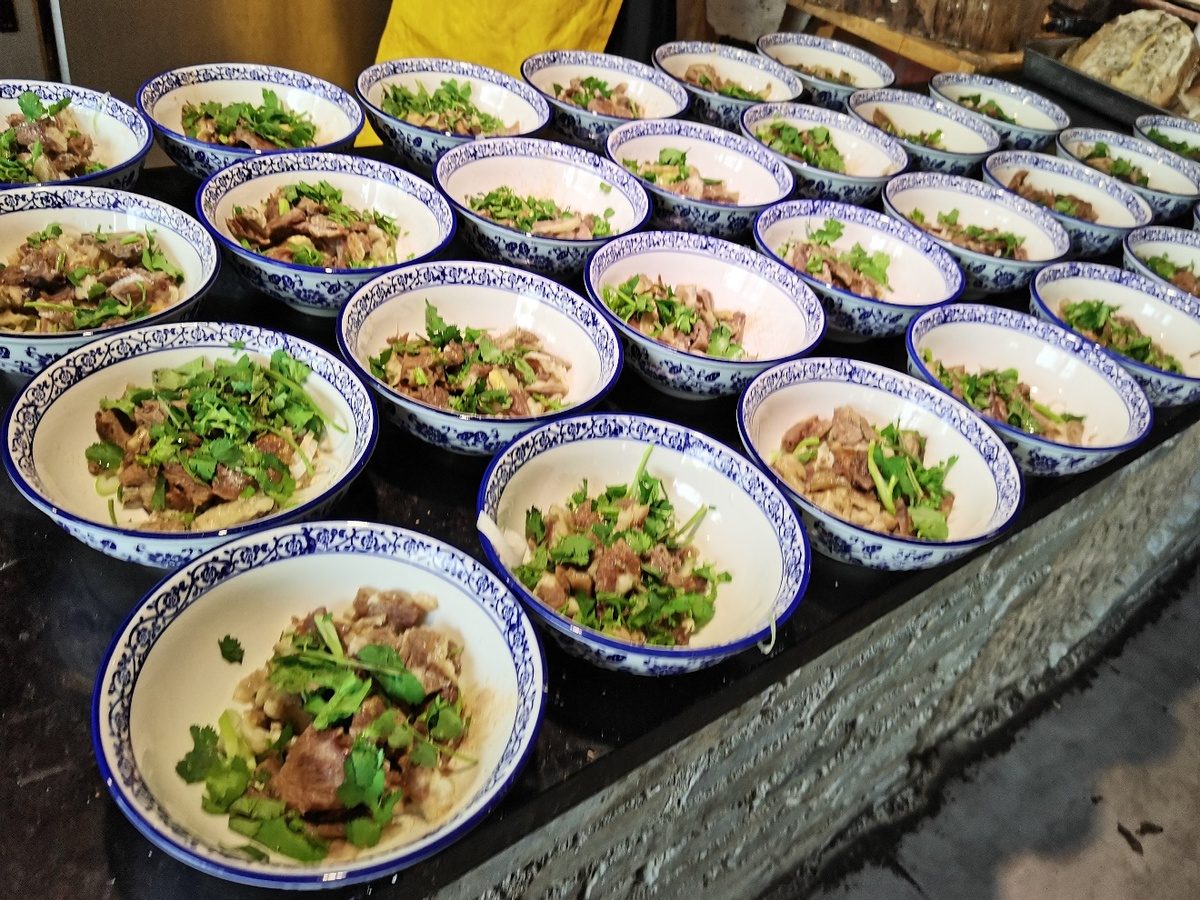
Chinese Food and Regional Delicacies
Chinese food, to a large extent, looks the way its regions look.
Behind every celebrated local dish stands a particular place and a method handed down over a long time.
Chinese food, to a large extent, looks the way its regions look.
Behind every celebrated local dish stands a particular place and a method handed down over a long time.
The same pot, at a different latitude, produces a different dish. The most striking feature of Chinese food culture is its regionality.
| Dimension | How Chinese food differs |
|---|---|
| Staples | Broadly, "rice in the south, wheat in the north": rice is the staple in the south and wheat products in the north — a pattern shaped over centuries by climate and farming conditions |
| Flavour | There is a widely circulated folk saying — "sweet in the south, salty in the north, hot in the east, sour in the west" — used to describe broad tendencies rather than as a strict statistical finding |
| Cuisine traditions | The "Eight Great Cuisines" has long been the most widely used summary: Shandong, Sichuan, Guangdong, Jiangsu, Fujian, Zhejiang, Hunan and Anhui. An earlier formulation spoke of "four great cuisines" (Shandong, Sichuan, Guangdong and Huaiyang) |
| The common thread | Whatever the tradition, all are built on "local produce as the foundation, mastery of fire and pairing as the craft" — both a technique and a body of local knowledge |
A celebrated local dish is rarely "invented". It is usually the result of three things accumulating over a long time.
The local water, grain and livestock determine what the dish can become. Move it elsewhere and, even following the same recipe, the flavour changes — this is the part that cannot be carried away.
Selecting ingredients, blending spices, controlling the fire, serving — every step carries unwritten rules. Passed down through masters and apprentices and through shops, they are eventually written down as a procedure.
Whether a dish survives is ultimately decided by local daily consumption. The ones bought again and again, and talked about again and again, are the ones that move from "snack" to "local specialty".
In modern times, three systems — geographical indications, intangible cultural heritage and group standards — give a regional delicacy a verifiable identity. This is the step from word of mouth to something that can be checked.

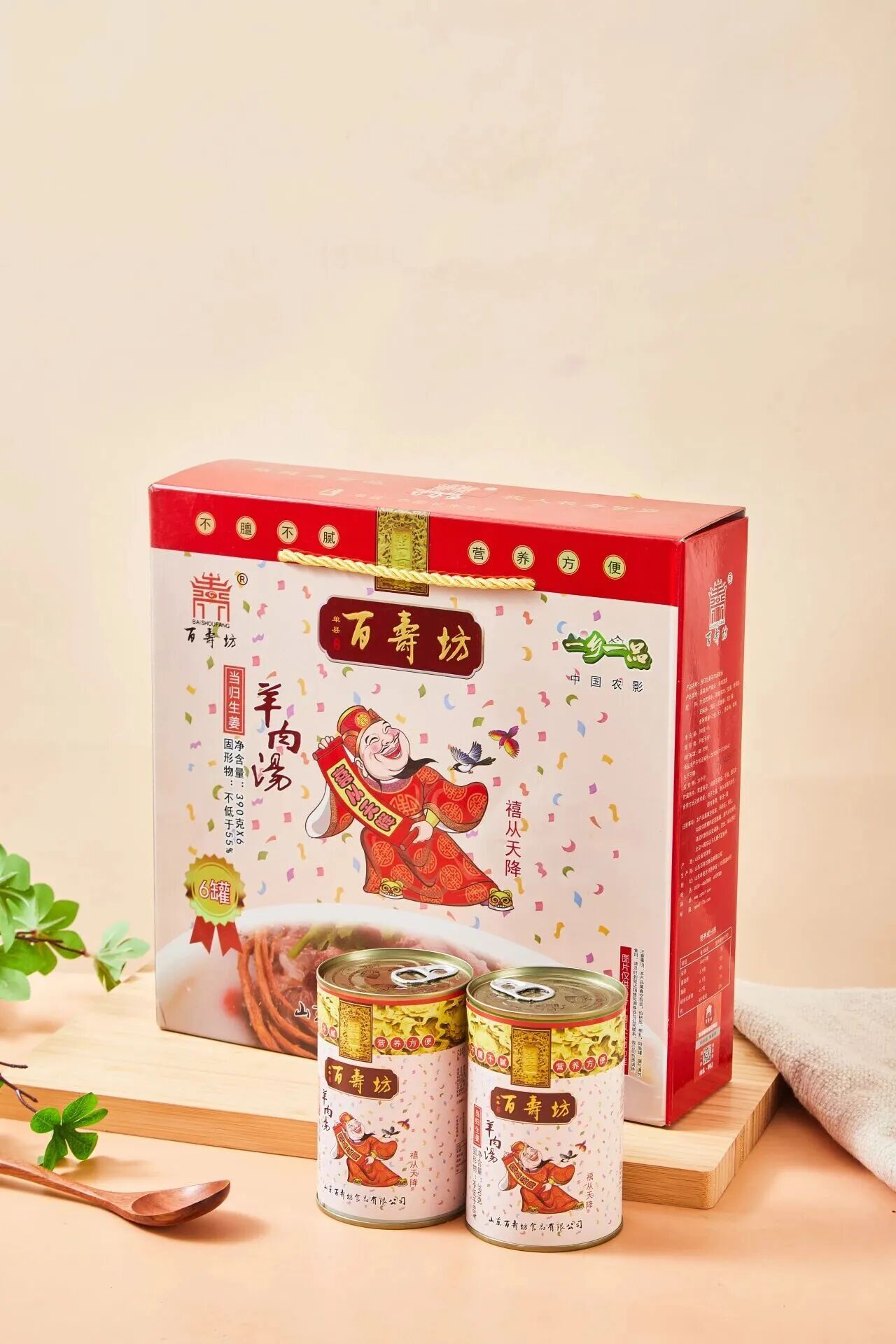
In southwestern Shandong, mutton soup is a concrete example of exactly this logic.
| Item | Details |
|---|---|
| Where it comes from | The sheep (the local Qingshan goat), the water (local sources) and the craft (laying the pot, a fierce high flame, the fusion of water and fat) |
| Method | Goat bones form the base with the mutton laid in; a fierce flame keeps the broth circulating, so fat and broth blend fully and the soup turns milky white on its own |
| Seasoning | Baizhi (Dahurian angelica root), cinnamon, dried tangerine peel, cloves and other spices are combined to lift the aroma and quell the muttony smell; coriander and chopped scallion are added on serving, with chili oil to taste |
| How it is eaten | Most common in autumn and winter, served with sesame flatbread, griddle cake or cellophane noodles — a familiar soup on northern tables in the cold season |
Good flavour depends on craft; survival depends on institutions. Today there are three main lines.
| Institution | What it governs | Shanxian Mutton Soup |
|---|---|---|
| Geographical indication (GI) protected product | Protects the name of a product tied to a specific region and a specific process, preventing misuse of the place name | Shanxian Mutton Soup is a GI-protected product (2015) |
| Geographical indication for agricultural products | Protects the agricultural product itself as grown in a specific region | The Shanxian Qingshan goat is a GI-protected agricultural product (2014) |
| Intangible cultural heritage | Protects the technique and the people who carry it, not only the product | The cooking technique of Shanxian Mutton Soup was inscribed on the Shandong provincial intangible cultural heritage list (2013) |
| Group standards | Drawn up by a social organisation under the Standardization Law and adopted voluntarily, turning the key points of a craft into an executable text | The association has drawn up group standards covering selection, cooking, filling, sterilisation and inspection |
It sets standards, manages collective marks, provides traceability services and carries out cultural documentation. The association does not carry out product certification, makes no efficacy claims for any food, and does not itself engage in franchising.
Once a regional delicacy survives only as legend, it becomes easy to pass off inferior goods as the real thing. Turning it into a verifiable standard and a traceable chain is the first step towards letting outsiders recognise it with confidence.
A few questions that come up often about Chinese food and regional delicacies.
| Question | Answer |
|---|---|
| What are the "Eight Great Cuisines" of Chinese food? | The formulation most widely used over a long period is: Shandong, Sichuan, Guangdong, Jiangsu, Fujian, Zhejiang, Hunan and Anhui. An earlier formulation spoke of "four great cuisines" (Shandong, Sichuan, Guangdong and Huaiyang); the divisions are not entirely consistent. |
| What qualifies a food as a GI-protected product? | It generally needs to satisfy "a defined geographical area", "a specific production process" and "a link between product quality and place", and be recognised by the competent authority through statutory procedure. Shanxian Mutton Soup became a GI-protected product in 2015. |
| What exactly does intangible cultural heritage protect? | It protects the technique, the people who carry it and the related practices — not merely the product. The cooking technique of Shanxian Mutton Soup was inscribed on the Shandong provincial list in 2013. |
| How does a group standard differ from a national standard? | A group standard is drawn up by a social organisation under the Standardization Law and adopted voluntarily; a national standard is issued by the national standardisation authority. The bodies that draw them up, and the way they apply, differ. |
| Why does a regional delicacy need to be traceable? | Because the authenticity of place and process is one of its core values. Recording the stages — breeding, slaughter, simmering, filling, inspection and distribution — is how that authenticity can be checked. |